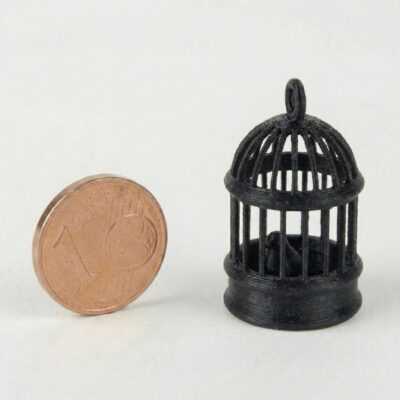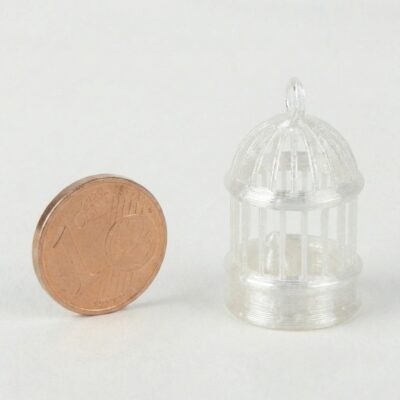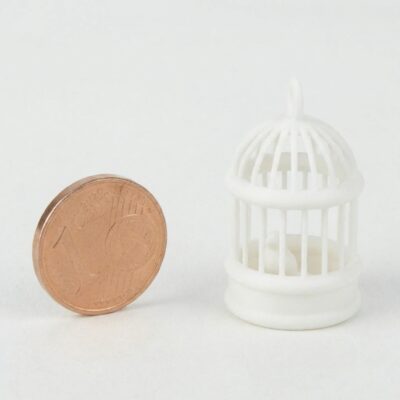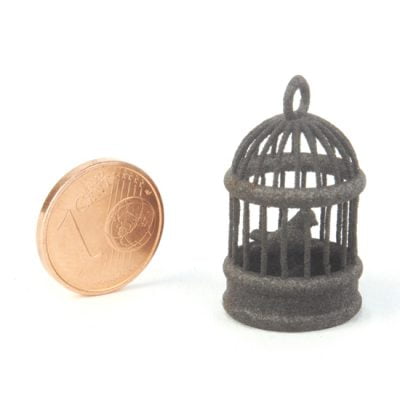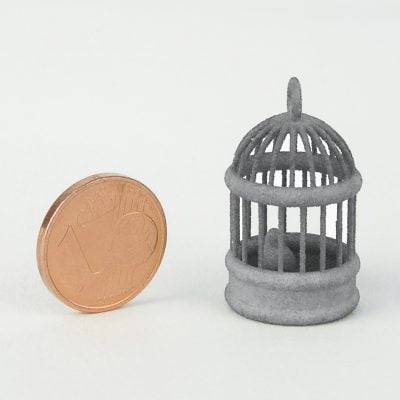
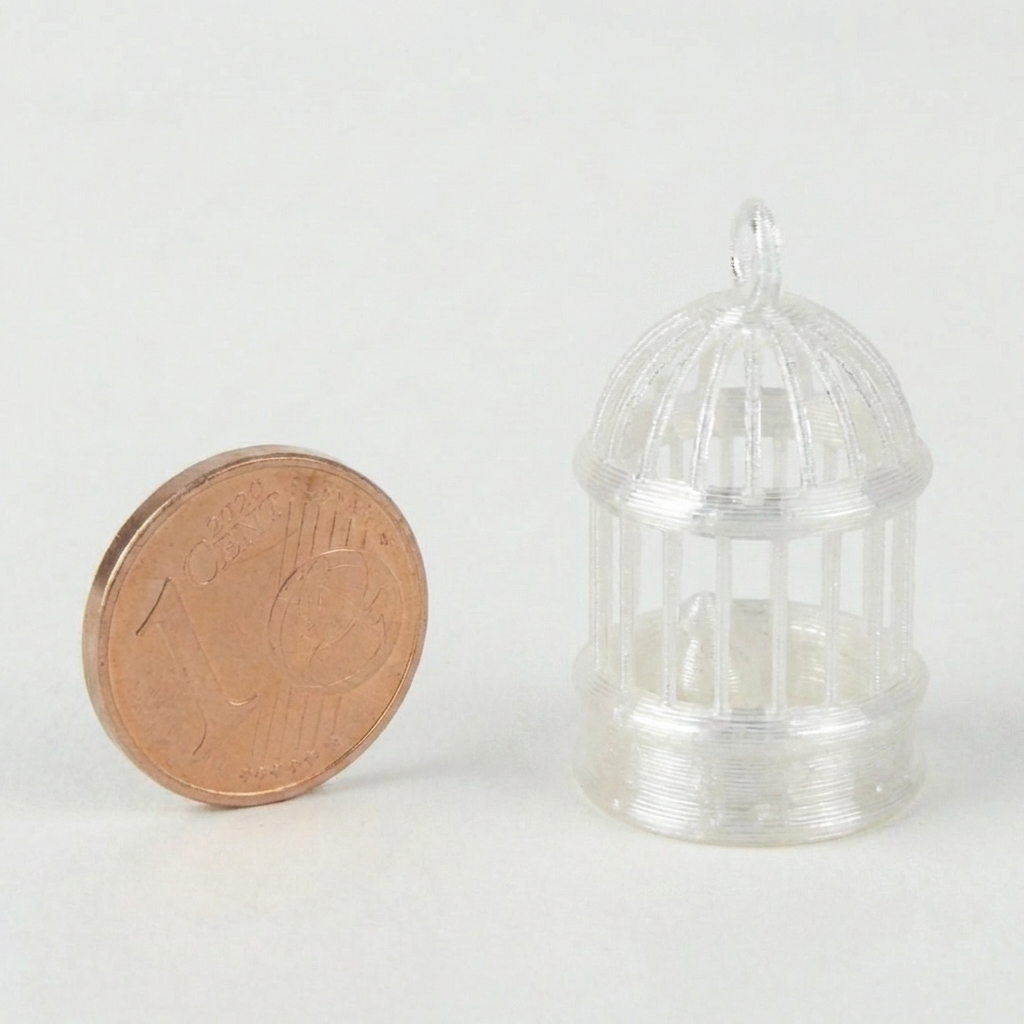
Material details
PETG (polyethylene terephthalate glycol) for the FDM 3D printing
I wait: • • •
Details: • • •
Resistence: • • • •
Flexibility: • •
– Stronger and more durable than PLA
– Good chemical and thermal resistance
– Suitable for outdoor use
Description
PETG (polyethylene terephthalate glycol) is a thermoplastic that offers a balance between ease of printing and PLA and the mechanical strength of more technical materials. It's the ideal choice when you need a stronger and more durable part than PLA, without the complexity of engineering materials.
PETG is resistant to impact, chemicals (alcohols, many diluted acids and bases), and UV light, making it suitable for outdoor use. It has a higher operating temperature than PLA (~75-80°C) and good toughness: it bends before breaking.
Available colors
White It is the standard color, always available.
Colors on request – It is possible to print in colored PETG based on the availability of filaments. For specific colors, contact us before ordering.
When to choose PETG
PETG is suitable for functional parts that must withstand impacts, chemicals, or outdoor exposure: containers, housings, non-critical mechanical components, signage, functional prototypes, and everyday parts. For higher thermal or mechanical requirements (heat resistance >100°C, high stiffness, solvent resistance), consider PETG. FDM technical materials like ABS or ASA.
Maximum printable volume: 256 × 256 × 256 mm
You can insert multiple objects into a single file, as long as they lie on the same plane.
Main features
- Moving parts: No
- Watertightness: No (better than PLA but not guaranteed)
- Food-safe: No (filament may be food-safe, but the FDM process introduces porosity)
- Suitable for dishwashers: No
- Recyclable: Yes
- Heat resistant: ~75–80°C
- UV resistance: good (suitable for outdoor use)
- Chemical resistance: good (diluted alcohols, acids and bases)
- Layer thickness: 0.12–0.20 mm
To know all the rules, see the sheet Technical details. For file preparation, read our 3D printing guide.
Modeling Guides
Technical details
DIMENSIONS
Maximum printable volume: 256 × 256 × 256 mm
WALL THICKNESS
Minimum wall thickness: 1.2 mm
Recommended thickness: ≥ 2 mm
DETAILS AND TEXT
Minimum size for details: 0.8 mm
Embossed text: minimum 0.5 mm thick
Engraved text: minimum 0.5 mm depth
MECHANICAL PROPERTIES (indicative values – PETG)
Tensile strength: 45–55 MPa
Elastic modulus: 2,000–2,200 MPa
Elongation at break: 15–25%
Impact strength (Charpy): 5–8 kJ/m²
Density: 1.27 g/cm³
THERMAL PROPERTIES
Glass transition temperature: ~80°C
Melting point: ~230°C
Operating temperature: up to ~75–80°C
RESOLUTION
Layer thickness: 0.12–0.20 mm
Dimensional tolerance: ±0.3 mm
To receive the complete technical sheet, contact us.
For 3D file preparation requirements, please see our 3D printing guide.