Material details
Flexible TPU (thermoplastic polyurethane) for the 3D printing
I wait: • • •
Details: • • •
Resistence: • • • •
Flexibility: • • • • •
– Elastic and wear-resistant
– Excellent shock absorption
– Available in FDM and SLS
Description
TPU (thermoplastic polyurethane) is an elastomer that combines the flexibility of rubber with the strength and workability of a plastic. Objects printed with TPU can be bent, compressed, and deformed, returning to their original shape. Its behavior is similar to that of rubber used for shoe soles, gaskets, and shock-absorbing parts.
Unlike traditional rubber, TPU is a thermoplastic material: it can be 3D printed without molds, with complex geometries and in small series, maintaining excellent mechanical properties and good resistance to abrasion, oils and atmospheric agents.
Two technologies available
We offer TPU 3D printing with two different technologies, each suited to different needs:
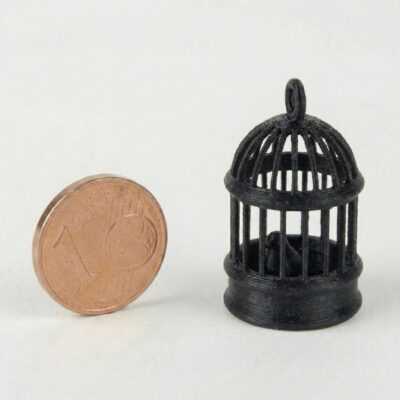
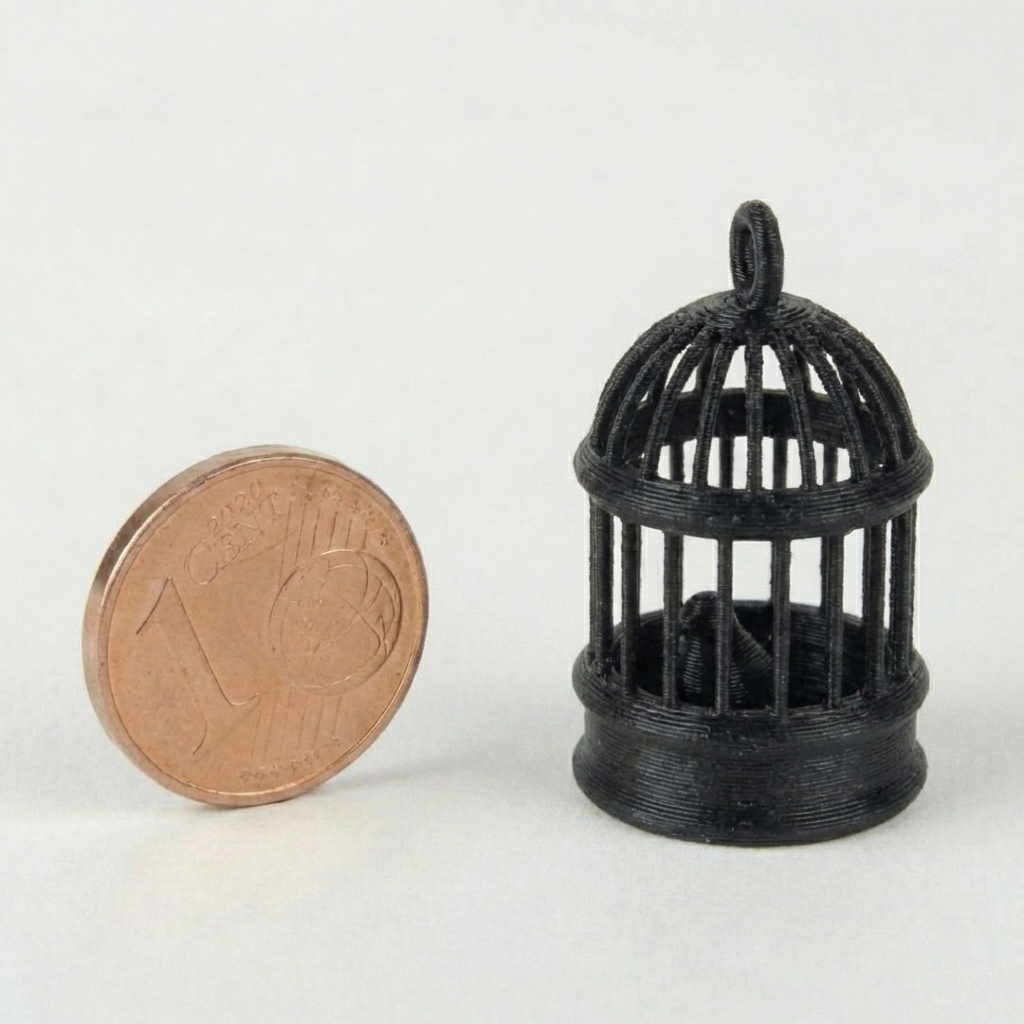
TPU FDM (filament) – Fused filament deposition printing on a Bambu Lab printer. This is the most economical option, suitable for prototypes, functional tests, and small runs where high surface definition is not required. The surface features the layer lines typical of FDM technology. Colors available based on filament availability.
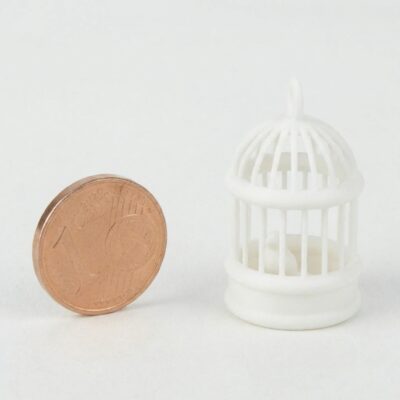
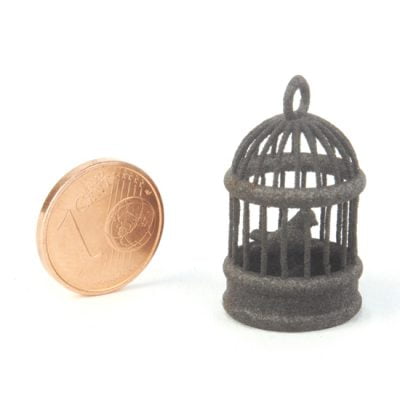
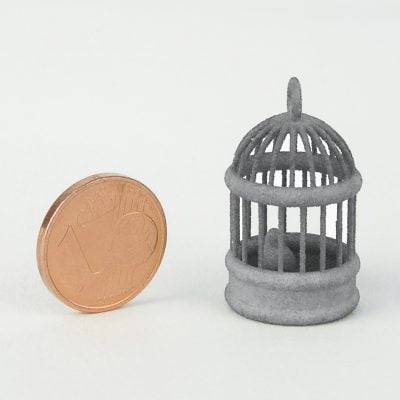
TPU SLS (Ultrasint® TPU 88A) – Selective laser sintering on TPU powder. Produces industrial-quality parts, smoother surfaces, finer details, and superior isotropic mechanical properties. It requires no support structures, allowing for complex geometries such as lattice structures, internal channels, and closed volumes. Native color: white. Available through Sculpteo.
Applications
TPU is ideal for creating functional and ergonomic prototypes, shock-absorbing parts, gaskets, seals, handles, knobs, protective covers, insoles, footwear, orthotics, sports equipment, and any component that needs to absorb shock or have a soft-touch surface.
TPU is not suitable for objects that need to stretch extremely, such as rubber bands: although it has a high elongation at break (up to 270% in the SLS version), the material is not designed to be used in continuous traction.
Available finishes
Raw (crude) – standard sandblasting (SLS) or native surface (FDM). The most economical option.
Dyeing – available for the SLS version. The parts are dyed black or other colors by dip.
Painting – Available for both versions. Spray painting in any RAL color with flexible TPU-based paint, resistant to fatigue and bending.
Chemical Smoothing – available for the SLS version. Provides a glossy and waterproof surface.
For custom finishes or specific needs, contact us.
Maximum printable volume
TPU FDM (Bamboo): 256 × 256 × 256 mm
TPU SLS (Ultrasint® TPU 88A): 274 × 270 × 300 mm
Volumes may vary slightly depending on the production provider. It is not possible to insert multiple objects into a single model/file.
Main features
- Shore Hardness: 88-90A (SLS) / 90-95A (FDM, varies by filament)
- Moving parts: No (SLS) / No (FDM)
- Waterproof: Yes (SLS, dense material) / No (FDM)
- For food: No
- Suitable for dishwashers: No
- Recyclable: No
- Heat resistant: up to 80-100°C (varies depending on the formulation)
- UV resistance: good
- Abrasion resistance: excellent
- Chemical resistance: good (oils, greases, hydrocarbons)
To find out all the rules to follow to create a model with this material, consult the sheet Technical details. For a complete guide to preparing your file, read our 3D printing guide.
Note on modeling
The 3D model for the TPU must be created according to the end-use position of the object. For example, to create a wristband, it needs to be shaped into the curved shape it will be used in, not as a flat strip. For the FDM version, it's important to design the model to minimize overhangs to reduce the need for supports, which are difficult to remove on flexible TPU.
Modeling Guides
- Autodesk Fusion – for mechanical design and parametric CAD
- Rhinoceros – for complex designs and shapes
- Blender – for digital sculpture and organic forms
If your model was generated with AI, check out our guide on How to 3D print AI-generated models.
Technical details
DIMENSIONS
FDM TPU (Bamboo): 256 × 256 × 256 mm
TPU SLS (Ultrasint® TPU 88A): 274 × 270 × 300 mm
WALL THICKNESS
Minimum wall thickness: 0.8 mm (SLS) / 1.2 mm (FDM)
Recommended thickness for good flexibility: 1–3 mm
Note: Walls that are too thick (over 8-10 mm) become rigid and lose the elastic properties of the material.
CLEARANCE
Minimum distance between parts: 0.5 mm (SLS) / 0.8 mm (FDM)
Non-sintered material exit hole (SLS): minimum 4 mm
DETAILS AND TEXT
Minimum detail size (SLS): 0.5 mm
Minimum detail size (FDM): 1 mm
Embossed text: minimum 0.5 mm thick (SLS) / 1 mm (FDM)
Engraved text: minimum 0.5 mm depth (SLS) / 1 mm (FDM)
MECHANICAL PROPERTIES (indicative values – Ultrasint® TPU 88A, SLS)
Shore Hardness: 88-90A
Tensile strength: 8 MPa
Elastic modulus: 85 MPa
Elongation at break: 270%
Bounce Resilience: 63%
Tear resistance: 35 N/mm
Density: 1.13 g/cm³
MECHANICAL PROPERTIES (indicative values – TPU FDM filament)
Shore Hardness: 90-95A (variable depending on the filament)
Elongation at break: 300-450% (filament data; in the printed part it depends on the adhesion between layers)
Note: The mechanical properties of the FDM version are anisotropic (weaker on the Z-axis) and are highly dependent on the printing parameters.
THERMAL PROPERTIES
Operating temperature: -40°C to +80°C (SLS)
Melting point: ~140°C
UV resistance: good
CHEMICAL RESISTANCE
Good resistance to: oils, greases, hydrocarbons, abrasion
Moderate resistance to: dilute acids and bases
Not resistant to: chlorinated solvents, concentrated acids
For information on choosing between FDM and SLS, or to receive the complete technical data sheet, contact us.
For 3D file preparation requirements, please see our 3D printing guide.