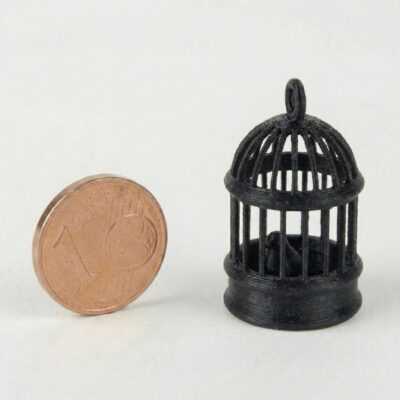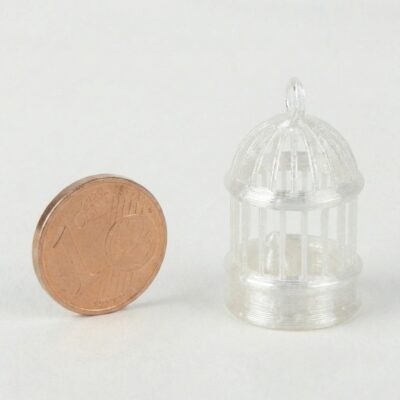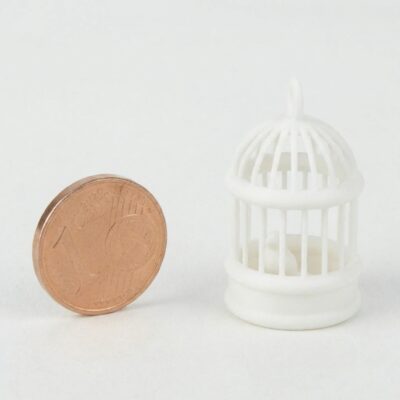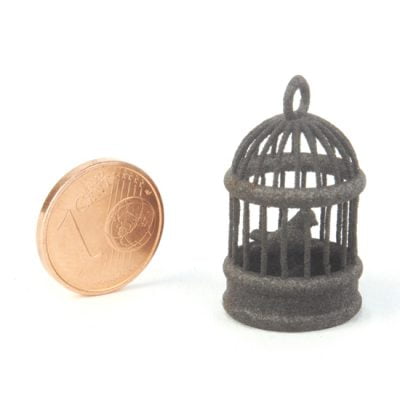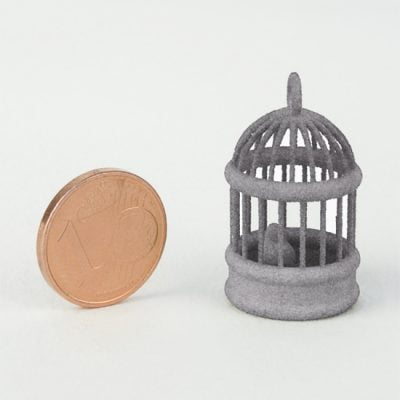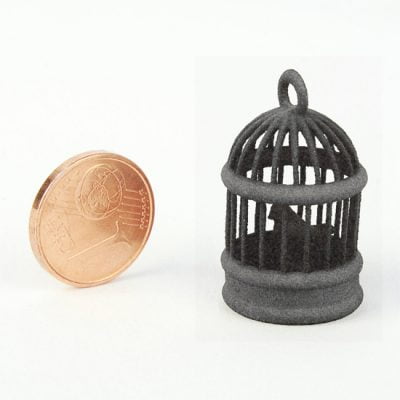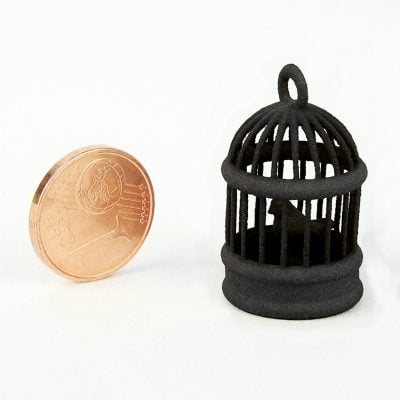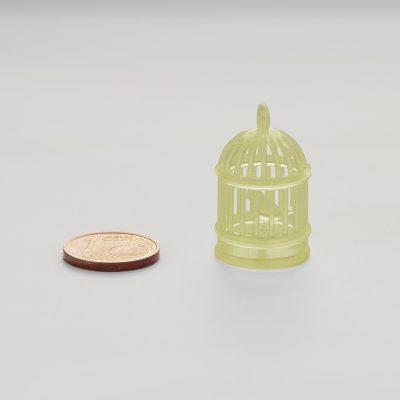
Material details
Technical materials for the FDM 3D printing on request
I wait: • • •
Details: • • •
Resistence: • • • • •
Flexibility: •
– High thermal and mechanical resistance
– Engineering materials and composites
– Available upon request
Description
In addition to the PLA and to the PETG, we offer FDM 3D printing with a range of technical and engineering materials for applications requiring superior performance: heat resistance, stiffness, chemical resistance, UV resistance or advanced mechanical properties.
These materials are available on request: contact us with your 3D file and a description of your project requirements. We'll recommend the most suitable materials and prepare a personalized quote.
Available materials
ABS (Acrylonitrile Butadiene Styrene) – Impact and heat resistant (~100°C). Suitable for mechanical parts, housings, and functional prototypes. Stronger than PLA but more prone to warping.
ASA (Acrylonitrile Styrene Acrylate) – similar to ABS but with excellent UV and weather resistance. The best choice for parts intended for outdoor use.
PLA-CF (carbon fiber filled PLA) – PLA reinforced with short carbon fibers for superior stiffness and a professional matte finish. Ideal for lightweight structural components and high-end aesthetics.
PA-CF (Carbon Fiber Filled Nylon) – Carbon fiber-reinforced nylon for the ultimate combination of mechanical strength, stiffness, and thermal resistance. For high-performance industrial applications.
PC (Polycarbonate) – among the most heat-resistant (~130°C) and impact-resistant FDM materials. Used in industrial, electrical, and automotive applications.
Other materials – depending on the project, we can also evaluate PAHT-CF, PPA-CF, PPS-CF and other advanced technical materials. Contact to discuss the specific needs of your project.
When to choose a technical material
FDM technical materials are indicated when the project requires performances that the PLA and the PETG cannot offer: heat resistance above 80°C, high stiffness, chemical resistance to solvents, prolonged UV exposure or significant mechanical loads.
For functional parts in series where mechanical isotropy is required, also consider the nylon PA12 MJF, which offers uniform mechanical properties on all axes.
Maximum printable volume: 256 × 256 × 256 mm
How to order
FDM technical materials are not available in the automatic configurator. To request a quote:
- Prepare your 3D file in STL, OBJ or 3MF format
- Contact indicating the desired material and the project requirements
- We confirm the feasibility, cost and delivery times
For a complete guide to file preparation, read our 3D printing guide.
Modeling Guides
- Autodesk Fusion – ideal for mechanical design
- Rhinoceros – for industrial design
- Blender – for organic forms
Technical details
DIMENSIONS
Maximum printable volume: 256 × 256 × 256 mm
(may vary depending on the material — some technical materials require a closed, heated chamber, which may limit volume)
WALL THICKNESS
Minimum wall thickness: 1.2 mm (variable by material)
Recommended thickness: ≥ 2 mm
INDICATIVE MECHANICAL PROPERTIES (comparison between materials)
ABS: tensile strength ~40 MPa, HDT ~100°C, good impact resistance
ASA: tensile strength ~45 MPa, HDT ~100°C, excellent UV resistance
PLA-CF: tensile strength ~55 MPa, elastic modulus ~8,000 MPa, very high stiffness
PA-CF: tensile strength ~70 MPa, HDT ~150°C, maximum mechanical and thermal resistance
PC: tensile strength ~60 MPa, HDT ~130°C, high impact resistance
The values are indicative and depend on the specific filament and printing parameters. The mechanical properties in FDM printing are anisotropic: the resistance on the Z-axis (between layers) is lower than that on the X/Y-axis.
RESOLUTION
Layer thickness: 0.12–0.20 mm
Dimensional tolerance: ±0.3 mm (variable by material)
For detailed information on the most suitable material for your project, contact us.
For 3D file preparation requirements, please see our 3D printing guide.