
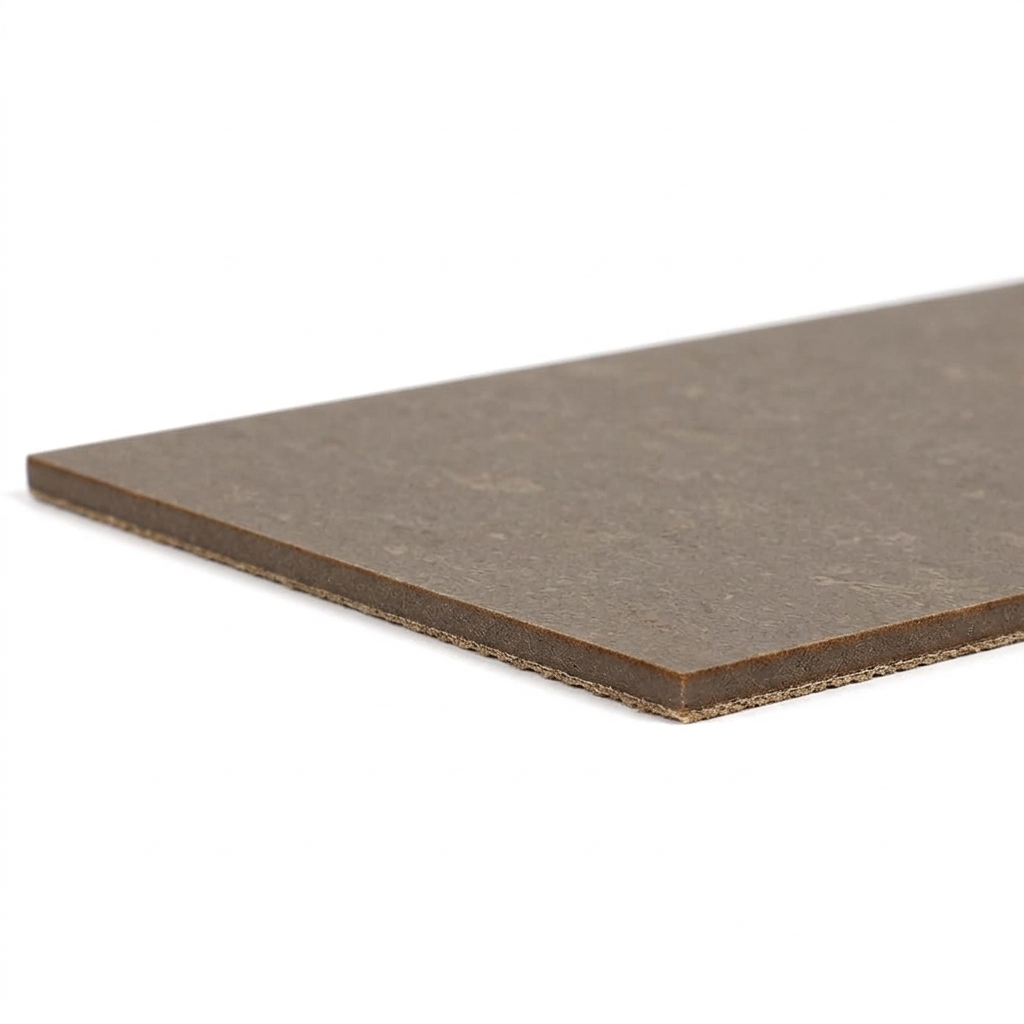
Description
Linoleum is made of linseed oil, wood and cork flour, natural resins and pigments, spread on a jute backing. It is matte, warm to the touch and easy to work; over time it becomes harder.
Notes for laser cutting
The laser cuts linoleum right through, up to 3 mm thick, with a clean, slightly darkened edge. Engraving, on the other hand, leaves an uneven background that shows in the print: for printing blocks it is best avoided.
The cut edge has a burnt smell that fades after a few days in the open air.
Printing blocks
The shapes of the block are cut through the full thickness and glued onto a rigid base, such as an MDF panel. The linoleum is the raised surface that takes the ink and the base is the empty space: the block is inked and printed like a hand-carved one, and if you need several copies they all come out the same.
All you need is a vector drawing where black is the raised area. Very thin lines, under one millimeter, don't hold up well under printing pressure and are hard to glue: it is best to thicken them.
Colors and thicknesses
Sheets up to 3 mm thick can be cut, both printmaking linoleum and furniture linoleum, in many colors. You can also supply your own sheets: the drawing is laid out on the size you provide.
Typical uses
Blocks for linocut and relief printing, stamps, surfacing for tops, doors and panels, inlays and colored inserts, tabletop objects.
On request
We can use linoleum for your project, in the color and size you need. Lead times and quantities are agreed in the quote. To get started, tell us in a few lines what you need to make.
You must be logged in to post a review.





Reviews
There are no reviews yet.